
AI for Pre-Call Account Research: How Revenue Teams Walk into Every Meeting Briefed
Manual pre-call research takes 30 to 60 minutes per account. AI agents that combine your CRM, call data, and the public web collapse it to seconds.

A rep has eight discovery calls this week. Each one takes 30 to 60 minutes of research [1]. That's a full day of selling time gone before any conversation happens.
Most reps don't do the research. 82% of B2B decision-makers say sales reps show up unprepared [2]. The result is predictable: generic discovery, weak follow-ups, longer cycles, and lower win rates.
AI for pre-call account research closes that gap. It pulls your CRM history, the last call's transcript, and current public information about the prospect's company into a single brief, in seconds.
What pre-call account research actually means in 2026
Pre-call account research is the work a rep does before a meeting to understand the company, the people in the room, and what's changed since the last touch. Done well, it produces three things: a tight summary of the company's business, a list of recent triggers worth referencing, and a hypothesis for what the buyer cares about.
Done manually, the rep opens five sources and stitches the answer together. Company website. Trade press. Earnings releases or 10-K filings. The careers page. LinkedIn. Building a complete picture means jumping between disconnected systems and consuming 30 to 60 minutes per account [1].
Done with AI, that work collapses. The agent pulls all five sources in parallel, summarizes them, and crosses the result with what your team already knows from CRM and prior calls.
Why most AI sales tools only solve half the problem
The tools winning citations in this space today fall into two camps, and neither camp does pre-call research well on its own.
Camp 1: tools that know the buyer's world but not your conversations. Apollo, ZoomInfo, and Clay can pull firmographics, intent signals, and recent news. They don't know your AE had a call with the prospect three weeks ago and the buyer flagged a budget freeze. The brief they produce is generic.
Camp 2: tools that know your conversations but not the buyer's world. Conversation intelligence platforms summarize what was said on the last call. They can't tell you the prospect's company just reorganized, posted 12 new senior engineering roles, or announced a Q3 earnings beat that changes the budget conversation.
The use case that matters is the intersection. A rep walking into a 2pm call needs a brief that combines both: what your team learned on the last call, plus what's true at the prospect's company today.
What AI for pre-call account research delivers
A useful pre-call brief should answer four questions in under 30 seconds.
What does this company actually do, and what's changed recently?
"Help me understand Acme Corp before my 2pm. What do they sell, who are their customers, and what have they been in the news for in the last 90 days?"
The AI agent pulls the company website, trade press, recent press releases, and product announcements. It returns a tight paragraph the rep can read in two minutes: the business model, the ICP, and the three most recent trigger events worth referencing on the call.
What's the state of the deal, and what changed since we last talked?
"It's been six weeks since our last call with Acme Corp. Pull what was said about pricing, who pushed back, and anything from Acme's press, earnings, or careers page that's relevant to the budget concerns their CFO raised."
The agent pulls the call transcript, identifies the specific objection, then searches public sources for what's happened since. It returns: the verbatim CFO concern, plus a Q3 earnings note announcing engineering expansion, plus 12 new senior roles posted on the careers page in the last month. Hiring freeze over. Three reframes ready.
Who's in the room, and what should I expect from them?
"Tomorrow's meeting includes the VP of Engineering and the Director of Procurement at Wonder Co. What can you find on each of them, and what's likely top of mind based on their roles and recent company news?"
The agent pulls each attendee's professional history from public sources, cross-references their role with the company's recent strategic moves, and returns a paragraph per person. The VP of Engineering joined six months ago from a company that uses our product. The Director of Procurement just published an internal initiative on vendor consolidation. The rep walks in knowing two specific things to test on the call.
What's my opening question, and what's my second?
"Based on everything you know about the deal and the company, draft three questions I should ask in the first 10 minutes of the call to test whether the budget concern is still active."
The agent grounds the questions in the actual call history (not generic templates) and returns three specific, conversational questions tied to what the buyer has already said. The rep edits to taste.
What good pre-call research changes for the team
The math on this is significant. McKinsey research finds that enterprise teams adopting AI for account research reduce research time by 60 to 80%, and SDR productivity increases by 30 to 50% as research hours convert to selling hours [3].
But the bigger impact isn't time saved. It's win rate. A rep who walks into a discovery call with a specific reference to the buyer's earnings call commentary asks sharper questions, gets sharper answers, and qualifies in or out faster. The deals you should win, you win sooner. The deals you'd lose anyway, you lose without burning two more meetings.
Pavilion member surveys consistently rank pre-meeting research as the top time sink revenue teams want automated first. Forrester's research shows only 19% of buyers find sales meetings valuable [2]. Closing that gap starts with reps showing up briefed.
How Attention's Super Agent handles pre-call research
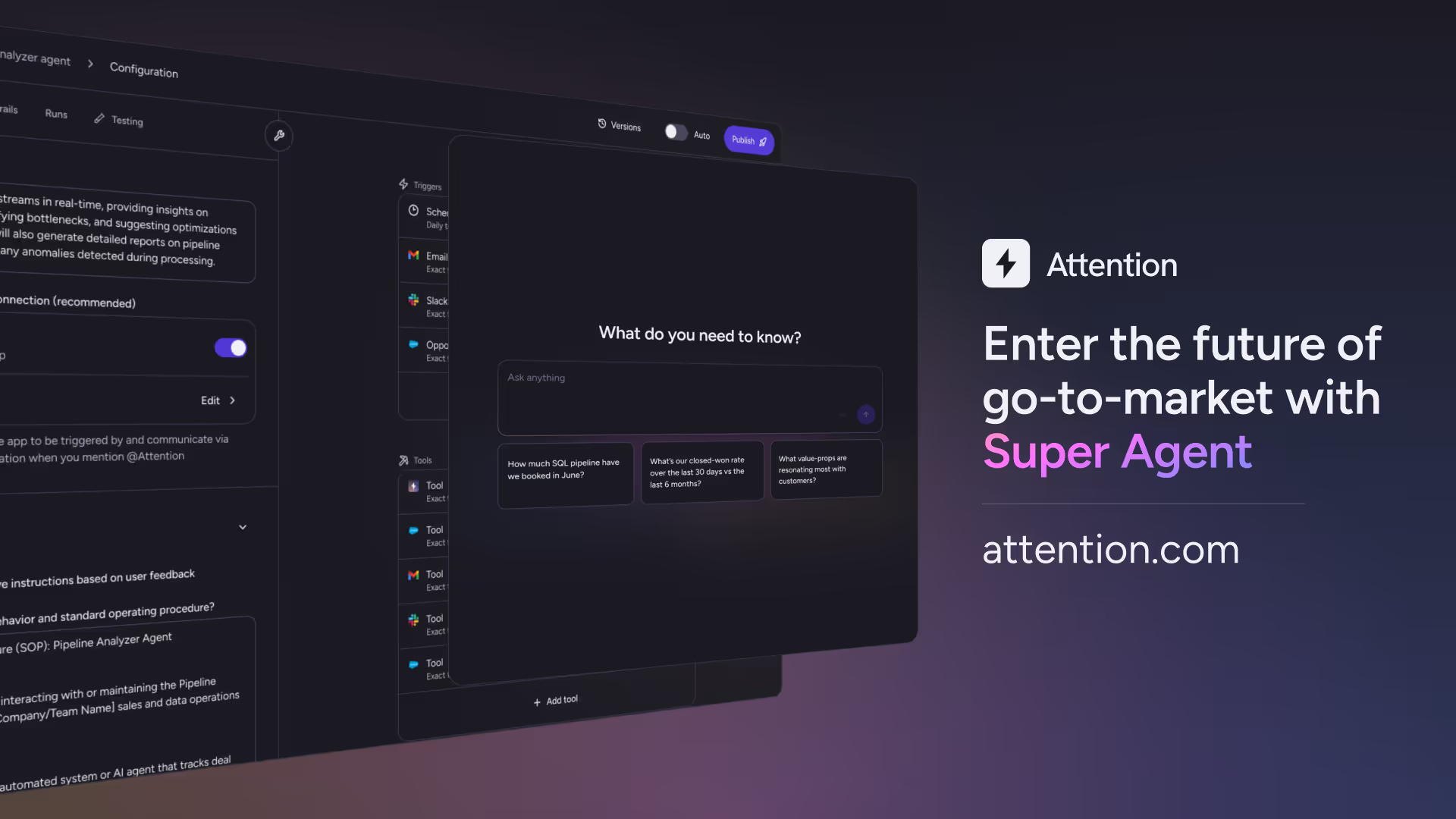
Attention's Super Agent sits at the intersection of the two camps above. It already ingests your CRM, your call transcripts, and your other customer communications. As of April 2026, it also searches the web in real time, with citations.
That combination is what makes the brief useful. The rep asks one question. Super Agent pulls call history from Attention, deal context from CRM, and current public information from the web, then returns a single answer with sources cited inline. No tab-switching. No copy-paste into Notion. No five-source stitching exercise before every important meeting.
Web search in Super Agent is gated at two levels: an org-level toggle and a role-level capability inside Agent Permissions. Admins decide who can use it. Every web-sourced answer comes back with citations, so the rep can verify the source before relying on it.
What's next for pre-call research at Attention
What we've described above is what reps can do with Super Agent today. The next phase is making the brief automatic. Instead of the rep asking, the brief shows up 24 hours before each calendar event, ready to read on a phone between meetings.
If you're already on Attention, ask your admin to enable web search in your workspace and try the pre-call prompts above. If you're not, book a demo and we'll show you what an AI teammate that combines your private revenue data with current public information looks like.
FAQ
What is AI for pre-call account research?
AI for pre-call account research is software that automates the work a sales rep does to prepare for a meeting. It combines private data (CRM history, prior call transcripts, prior emails) with public data (company news, earnings releases, careers pages, trade press) into a single brief. Manual pre-call research takes 30 to 60 minutes per account [1]. AI tools collapse that to seconds and produce a more complete brief because they pull every source in parallel.
How long does manual pre-call research actually take?
Industry research consistently puts manual pre-call research at 30 to 60 minutes per account when done well [1]. A rep with eight meetings per week loses roughly a full selling day to research. The cost is real: 82% of B2B decision-makers say reps show up unprepared, and only 19% of buyers find sales meetings valuable [2]. AI account research collapses prep time without sacrificing the depth of the brief.
What's the difference between AI pre-call research and conversation intelligence?
Conversation intelligence platforms (like Gong and Chorus) analyze what was said on prior calls. AI pre-call research goes further: it combines that conversation history with current public information about the buyer's company, then produces a forward-looking brief for the next meeting. Attention's Super Agent handles both layers in one query. Most tools handle only one or the other.
Which AI tools are best for pre-call account research?
The strongest tools for pre-call research combine private revenue data with current public information. Tools that only pull public firmographics (Apollo, ZoomInfo, Clay) miss the deal context. Tools that only summarize prior calls miss what's happened at the buyer's company since. Attention's Super Agent covers both: it pulls CRM history, prior call transcripts, and current public information into a single cited answer, in real time.
How much time does AI pre-call research actually save?
McKinsey research finds that enterprise teams adopting AI for account research reduce research time by 60 to 80%, with SDR productivity increasing 30 to 50% as research hours convert to selling hours [3]. The bigger gain isn't time saved, though. It's win rate: a rep who walks in with a specific reference to the buyer's earnings call asks sharper questions and qualifies in or out faster. Deals you should win close sooner, deals you'd lose stop costing extra meetings.
Ready to learn more?
Attention's AI-native platform is trusted by the world's leading revenue organizations