
Super Agent Now Searches the Web: Real-Time Research, Mid-Deal
Super Agent now combines your private CRM and call data with real-time web search, so revenue teams can prep, diagnose, and risk-rank deals in seconds.

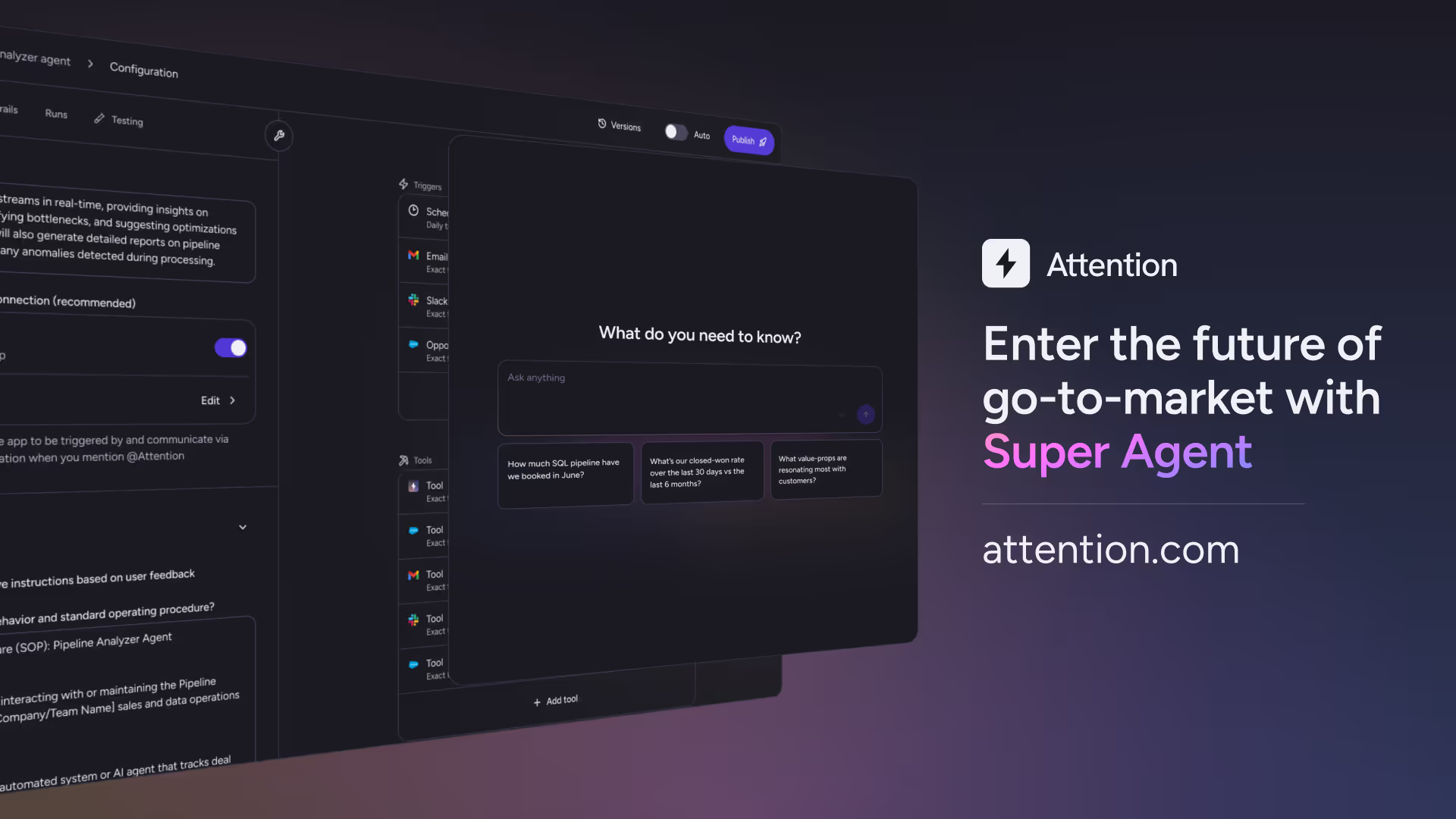
Your prospect's company just announced layoffs. A competitor pushed out new pricing this morning. The deal you thought was healthy went quiet two weeks ago, and you don't know why.
Until now, Super Agent could tell you everything that ever happened inside your CRM, your calls, and your other customer communications. What it couldn't tell you was what happened on the internet this morning.
That changes today. Super Agent can now search the web.
Why we built this
When we introduced Super Agent in 2025, we positioned it as your always-on revenue analyst, strategist, and operator. It already ingests your CRM, your call transcripts, and your other customer communications to deliver answers in seconds.
But revenue teams don't just need answers about their data. They need answers about their world.
A rep prepping for a 2pm call needs to know what their prospect's company actually does. A manager building a board update needs to weight pipeline risk against what's happening at each buyer's company. A CRO trying to understand a stalled deal needs to see whether something changed at the buyer that explains the silence.
Until now, that work happened in tabs. Reps opened the prospect's website, then trade press, then the careers page, then earnings releases. They copy-pasted into Notion, then back into Salesforce. Most reps don't do it at all. The ones who do lose 20 to 30 minutes on every important call.
Super Agent's web search closes that loop. It combines what your prospect said on the last call with what's true on the public internet right now, and gives you a single answer.
How web search works in Super Agent
Super Agent decides when to use web search based on what you're asking. If your question can be answered from your own data, it doesn't search. If it needs current public information, it does, and it cites the source.
It works everywhere Super Agent works:
- In Slack, when you ask Super Agent a question in a thread or DM
- In Builder, when you're designing an AI sales agent that needs current information as part of its workflow
- In the Attention web app, when you're chatting with Super Agent directly
There's no separate setting for reps to remember. Web search is part of how Super Agent thinks.
What web search changes for revenue teams
Web search lets reps and managers ask Super Agent questions that combine private conversation data with current public information in a single answer. The shift is from "what does my company know about this account" to "what does my company know about this account, plus what's true today." Four examples:
Pre-discovery: walk into a first call already briefed
"I have a discovery call with Acme Corp at 2pm. Help me understand the company. What do they sell, who are their customers, what have they been in the news for recently, and what's likely top of mind for the team I'm meeting with?"
Super Agent already has the prospect's title and company from CRM. It searches the company's website, recent press, and trade coverage to come back with a tight brief: Acme sells inventory management software to mid-market retailers, just expanded into Europe last quarter, recently announced a partnership with a major logistics platform, and has been writing publicly about peak season readiness. You walk into the discovery call ready to ask sharp questions instead of generic ones.
Pre-call: walk in knowing what's changed
"It's been six weeks since our last call with Acme Corp. What's changed at the company that's relevant to the pricing concerns their CFO raised? Pull anything from their press, earnings, or careers page that addresses it."
Super Agent goes back to the call transcript, identifies the specific objection (the CFO's worry about per-seat pricing during a hiring freeze), and then searches public sources for what's happened at Acme since. It comes back with: a Q3 earnings note announcing they're expanding the engineering org, 12 new senior roles posted on their careers page in the last month, and a press release on a new business unit. The hiring freeze is over. You walk in with three specific reframes ready.
Mid-deal: explain the silence
"The Wonder Co deal stalled three weeks ago after legal review. Has anything changed at Wonder Co publicly that explains it (restructuring, leadership announcements, funding news)?"
Super Agent already knows the deal stalled and at which stage. It pulls the last three calls, identifies that legal was the gating function, and searches public news, press releases, and the Wonder Co blog for any change. It returns: Wonder Co announced a reorganization two weeks ago, and trade press covered the GC's departure. The deal isn't dead. It's parked until they backfill. Now you know whether to escalate or hold.
Pipeline review: risk-rank against reality
"Of my top 20 deals this quarter, which buyers' companies have had bad public news in the last 30 days, and rank by how exposed each deal is based on what the champion told us on calls."
Super Agent pulls the top 20 deals, scans each company's press, news coverage, and earnings releases for layoffs, missed quarters, and leadership exits, then weights the risk by what the champion actually committed to on the most recent call. It returns a ranked list: three deals where the champion promised internal advocacy but their company just announced cost-cutting, one where the champion's CEO publicly committed to the category we sell into, and 12 that are unaffected. Your Monday standup goes from 60 minutes of "what's the status" to 15 minutes of "who do we save and who do we accelerate."
Built for the AI-native revenue stack
Most AI sales tools today fall into one of two camps. Autonomous SDR platforms like 11x and Artisan can prospect and send outbound, but they don't know what happened on your calls. Conversation intelligence platforms like Gong and Chorus know what was said, but they can't reach beyond their own walls. Attention's Super Agent is built for revenue teams who want both, on top of an AI sales agent layer that can act on what it finds.
It knows what your prospect said on the call last Tuesday. It knows what their company announced this morning. It knows what your AE wrote in Salesforce on Wednesday. And it can act on all three.
That's what makes web search a category move, not a feature update. It closes the gap between "I have a meeting in 30 minutes" and "I'm ready for it."
Control, clarity, and security
Web search is gated at two levels, because not every team wants every rep on the public internet inside their AI workflow.
- Org-level toggle. Admins decide whether web search is available in their workspace at all. Off by default until your team is ready.
- Role-level permission. Inside Agent Permissions, web search is a capability you grant to specific roles. You can let managers and account executives use it while keeping it off for support roles, or any combination that fits your structure.
- Citation-first answers. When Super Agent uses web search, it shows you the sources inline. You decide whether to trust them.
We built it the same way we build the rest of Attention. Read-only by default. Permission-aware. Cited by default. You stay in control of what your AI teammate can see and do.
What's next
Web search is the start of giving Super Agent richer access to the world outside your CRM. Over the next few months, expect deeper integrations with the public sources revenue teams actually use, and more agent templates that combine your conversation data with current information out of the box.
If you're already on Attention, ask your admin to enable web search in your workspace. If you're not, book a demo and we'll show you what an AI teammate that knows both your customers and the world can do.
FAQ
Can AI sales agents search the web in real time?
Yes. As of 2026, leading AI sales agents combine your private conversation data with real-time public information from the web. Attention's Super Agent can pull current funding announcements, recent press, competitor pricing, and regulatory updates while you're prepping for a call or analyzing a deal. The agent decides automatically when to search the web based on the question, and every web-sourced answer comes with citations so you can verify the source.
How does Super Agent decide when to use web search?
Super Agent picks web search automatically based on the type of question. If you ask about a deal, a rep, or a pattern in your historical conversations, it answers from Attention's data. If you ask about current news, recent funding, current pricing, or anything that lives on the public internet today, it searches the web and cites the sources. Reps don't need to flip a setting or pick a mode.
Is web search in Super Agent secure for enterprise revenue teams?
Yes. Web search in Super Agent is gated at two levels: an organization-level toggle controlled by admins, and a role-level capability inside Agent Permissions. Admins decide whether web search is available in the workspace at all, and which roles can use it. Attention runs on SOC 2 Type II infrastructure, encrypts data in transit and at rest, and never trains models on customer data. See attention.com/security for full detail.
What can revenue teams ask Super Agent now that it has web search?
The new questions cluster into four areas: pre-discovery research (understanding a prospect's company, products, and customers before a first call), pre-call prep (combining what was said on the last call with what's changed at the prospect's company since), mid-deal context (explaining a stalled deal by checking whether something changed publicly at the buyer), and pipeline review (risk-ranking deals against current public news at each buyer's company). The common thread: questions where the answer depends on combining private conversation data with something happening outside your CRM.
How is Attention's web-enabled Super Agent different from Gong or 11x?
Most AI sales tools sit in one of two categories. Autonomous SDR platforms like 11x and Artisan handle outbound prospecting but don't know what happened on your live calls. Conversation intelligence tools like Gong analyze calls but can't reach beyond their own data. Attention's Super Agent is built for revenue teams who want both, and now adds real-time web access on top. It knows what your prospect said on the call, what their company announced this morning, and what your rep wrote in Salesforce, then it can act on all three.
Ready to learn more?
Attention's AI-native platform is trusted by the world's leading revenue organizations