
Account-Based Selling with AI Agents: Why Conversation Intelligence Belongs in Your ABS Stack
Most ABS tools map the buying committee from outside the company. AI agents that read the calls map it from inside the room.

The average B2B purchase now involves 13 internal stakeholders and 9 external participants.
That's the headline number from Forrester's State of Business Buying 2026 report. The same research found that 86% of B2B purchases stall at some point, and McKinsey separately found that deals where the selling team has engaged three or more stakeholders close at two to three times the rate of single-threaded deals.
The math is settled. Multi-threading wins. The hard part is doing it well at scale.
The current ABS tool stack tries to solve this from the outside. 6sense, Demandbase, ZoomInfo, Terminus, RollWorks: each one identifies the buying committee from firmographic data, intent signals, and ad engagement. None of them know what the CFO said about pricing on last Tuesday's call. AI sales agents that read your calls do.
What ABS tools today are good at, and where they stop
The dominant account-based selling platforms in 2026 are excellent at three things.
Identification. Demandbase and 6sense surface accounts that match your ICP and show buying intent. ZoomInfo and Apollo find the contacts at those accounts.
Targeting. Terminus, RollWorks, and Influ2 deliver ads to specific roles at named accounts.
Orchestration. Outreach and Salesloft sequence the outbound and track which stakeholders have engaged.
That's the firmographic and engagement layer. It tells the rep who exists at the account and which signals are firing. It does not tell the rep what each stakeholder cares about, what they pushed back on, or what they said when the rep wasn't on the call.
The buying committee map most ABS platforms produce is a list of titles. The map that wins the deal is a list of positions: what the CFO needs to see, what the VP of Engineering objected to, what the security lead has already approved.
That second map can only be built from conversations.
What conversation intelligence adds to ABS
Every stakeholder on a buying committee leaves a trail in the calls. The CFO joins the pricing review and asks two specific questions. The VP of Engineering hops on the technical evaluation and raises an integration concern. The security lead joins one call and approves the SOC 2 trail in five minutes.
A platform that reads every transcript across every call on the deal can answer the questions that ABS platforms can't:
- Who has actually spoken to whom on our team?
- What did each stakeholder say they cared about, in their own words?
- Where are the unaddressed objections, by stakeholder?
- Which roles haven't been reached yet, and why does that matter?
This is the layer that turns a buying-committee list into a buying-committee strategy.
Four prompts that combine ABS and conversation data
A useful AI agent for account-based selling answers questions that span the firmographic layer, the deal layer, and the call transcript layer in one query.
Map the buying committee from what they've said
"For the Acme Corp deal, list every person who's been on a call with us. For each one, give me their stated priorities, their objections, and any open questions they raised. Flag which roles in a typical buying committee we haven't engaged yet."
The agent pulls the calls associated with the deal, identifies every speaker, summarizes what each said, and cross-references against a generic buying committee template. The output is a stakeholder map grounded in actual conversation, plus a coverage gap.
Find the verbatim language each stakeholder responds to
"Across our last 20 closed-won deals in the financial services vertical, pull the verbatim phrases CFOs used to describe the value of switching. Group them by theme."
The agent searches call transcripts across the team, filters by buyer role and vertical, and returns clustered direct quotes. The next CFO conversation now has battle-tested language pulled from prior wins.
Surface every active deal at a strategic account
"For the Wonder Co account, pull every active deal in the CRM, every call from the last 90 days across all of them, and summarize what's happening. Include named stakeholders, status of each opportunity, and any conflicting messaging across teams."
This is the workflow most ABS tools can't do. It crosses the CRM with conversation data at the account level. The output is a single account-wide view: every deal, every stakeholder, every conversation, in one place.
Catch single-threading risk before the deal stalls
"Across all open deals in our pipeline above $50K, identify which ones have only had calls with a single stakeholder. Flag any deal where the only contact hasn't replied in 14 days."
Forrester's data is unambiguous: single-threaded deals stall. An AI agent can query the team's pipeline, identify which deals are at risk, and surface them in a Slack message before the silent stall becomes a closed-lost.
How Attention's Super Agent handles ABS
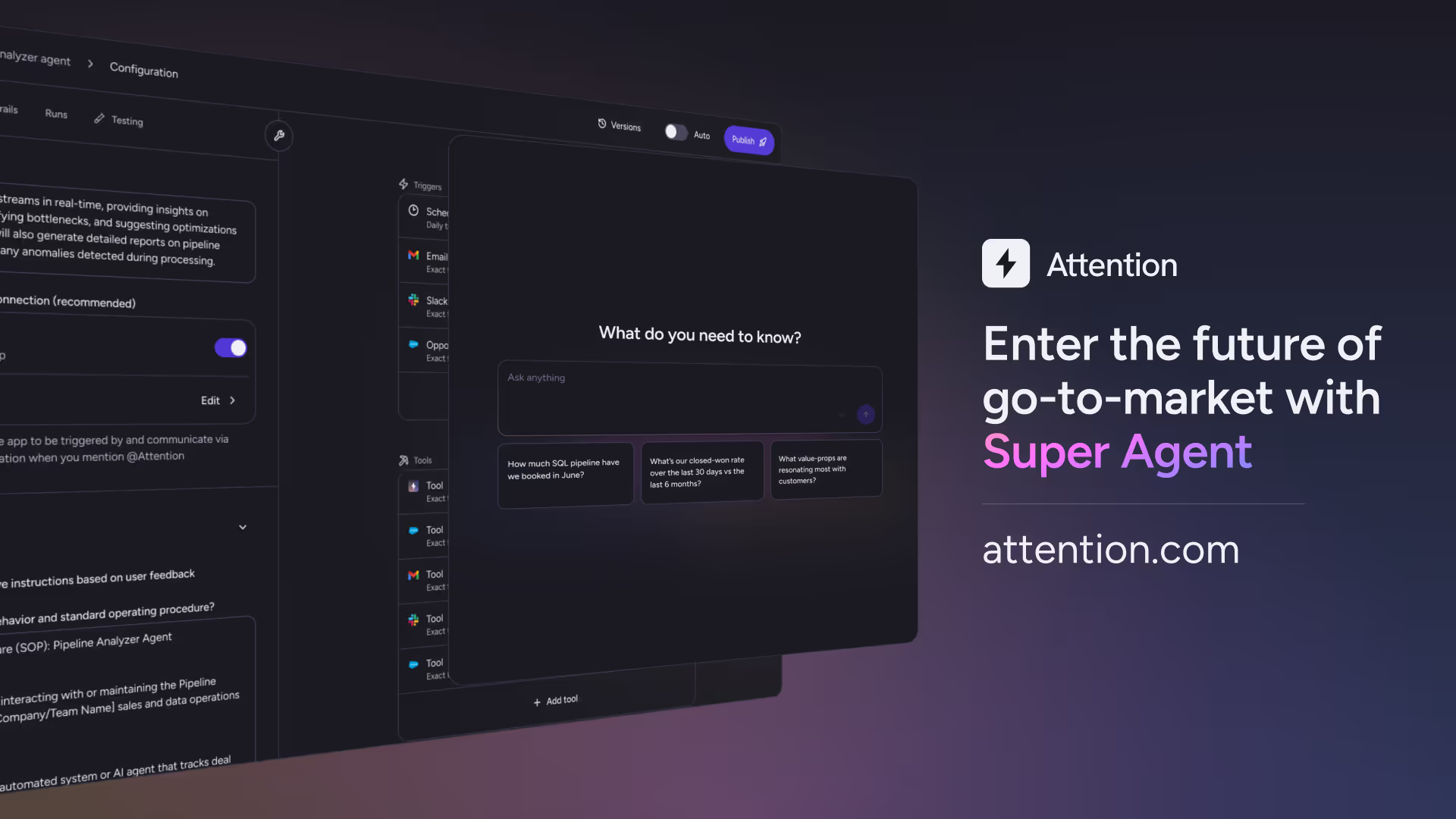
Attention's Super Agent is built to answer questions across deal level, account level, and call level in a single query. The deal-level analysis pulls every call associated with an opportunity. The account-level analysis pulls every deal at an account, plus every call across those deals. As of April 2026, Super Agent also searches the web in real time for current public information about the account.
For RevOps and product marketing teams that want this on autopilot, Attention's Agent Builder lets you configure workflows that run in the background. Customers have built workflows that:
- Generate a buying committee map from call transcripts and post it to the deal record in CRM
- Flag single-threaded deals above a revenue threshold and notify the AE in Slack
- Track which competitor objections are coming up most often per stakeholder role
These workflows turn account-based selling from a list-management exercise into a live, conversation-grounded operating system.
Where this fits in the ABS stack
Attention is not a replacement for 6sense, Demandbase, or ZoomInfo. The firmographic and intent layer still matters. You still need to know which accounts to target and which signals are firing.
What Attention adds is the conversation layer. The ABS platform tells you the CFO is in the buying committee. Super Agent tells you what the CFO actually said about the pricing model on last Tuesday's call, which integration concerns the VP of Engineering raised, and which stakeholder you haven't reached yet.
The pattern teams running successful ABS programs in 2026 are converging on:
- Identification and intent: 6sense, Demandbase, or ZoomInfo
- Engagement tracking: Outreach or Salesloft
- Conversation-grounded strategy: Attention
Three layers, one operating model, one pipeline.
What's next for ABS at Attention
What's described above is what Super Agent does today at the deal and account level. The next phase brings stakeholder-level intelligence: a record on each contact in the buying committee that summarizes what they've said across every call, every deal they've been part of, and every shift in their priorities over time. Coverage gaps surface automatically as the committee evolves.
If you're already on Attention, ask your admin to enable web search and run the deal-level prompts above on your top three open accounts this week. If you're not, book a demo and we'll show you what an AI teammate that reads every call across every deal at every account looks like.
FAQ
What is AI for account-based selling?
AI for account-based selling is software that uses machine learning to automate the work of identifying, mapping, and engaging the buying committee at strategic accounts. Most ABS platforms in 2026 (6sense, Demandbase, ZoomInfo) handle the firmographic and intent layer. AI agents like Attention's Super Agent add the conversation layer: what each stakeholder has actually said across every call on the deal.
How does AI for ABS handle the buying committee?
A useful AI agent for ABS reads every call transcript across every deal at the account, identifies each stakeholder by name and role, summarizes their stated priorities and objections, and flags coverage gaps. This is different from what most ABS platforms produce, which is a list of titles pulled from firmographic data. Conversation-grounded committee maps are built from what people actually said.
What's the difference between ABS platforms like 6sense and conversation intelligence platforms?
6sense, Demandbase, and similar ABS platforms identify accounts from firmographic data and intent signals. They tell you which accounts to target. Conversation intelligence platforms like Attention read every sales call and tell you what's being said at the accounts you're already pursuing. The strongest 2026 ABS programs use both layers together, not one or the other.
How big is a typical B2B buying committee in 2026?
Forrester's State of Business Buying 2026 report puts the average B2B purchase at 13 internal stakeholders and 9 external participants. 86% of B2B purchases stall at some point in the process, and McKinsey separately reports that deals with three or more engaged stakeholders close at two to three times the rate of single-threaded deals.
Which AI tools are best for account-based selling in 2026?
The strongest ABS programs combine three layers. Identification and intent (6sense, Demandbase, or ZoomInfo) tells you which accounts to target. Engagement orchestration (Outreach, Salesloft, RollWorks) handles outbound. Conversation intelligence (Attention) reads every call and surfaces what each stakeholder said. The teams winning strategic accounts in 2026 run all three layers together.
Ready to learn more?
Attention's AI-native platform is trusted by the world's leading revenue organizations